
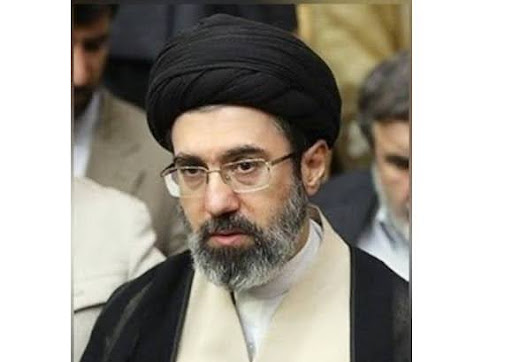
Iran’s military forces conducted a series of strikes against Gulf states on Sunday, killing two people in Saudi Arabia and damaging critical infrastructure in Bahrain as the country’s new supreme leader, Mojtaba Khamenei, took office. The attacks targeted Saudi Arabia, Kuwait, Qatar, the UAE, and Bahrain, with Saudi air defenses intercepting 15 drones and a residential area in Al-Kharj sustaining direct impact. The strikes came hours after the Assembly of Experts formally announced Mojtaba’s appointment.
Mojtaba Khamenei, 56, was chosen to lead Iran following the assassination of his father Ayatollah Ali Khamenei in a joint US-Israeli airstrike on February 28. The new supreme leader has no formal electoral or governmental experience, having spent his career as a behind-the-scenes power broker in his father’s inner circle. He is deeply connected to both the IRGC and Iran’s conservative clerical establishment.
Iranian state institutions rallied instantly behind the new leader. The Revolutionary Guards, armed forces command, and senior government officials issued rapid endorsements. Parliament’s speaker called loyalty to Mojtaba a religious duty. Ali Larijani, a prominent security figure, expressed confidence in Mojtaba’s leadership. Iranian state media portrayed the appointment as a moment of strength rather than crisis.
Israel contributed to the military pressure by launching fresh strikes on Iranian territory on Monday, targeting what the military described as regime infrastructure. Iranian state media broadcast imagery of missiles bearing messages of loyalty to the new supreme leader. Israel also confirmed strikes on Hezbollah positions in Lebanon, extending the theater of operations. Trump, speaking in an Israeli media interview, said the decision on ending the war would be made jointly with Netanyahu.
The depth of the regional crisis is difficult to overstate. From Beirut to Riyadh to Tehran, military operations are underway simultaneously, oil markets are volatile, and a new, untested leader has been installed at the head of the Islamic Republic. Mojtaba Khamenei’s early decisions will either stabilize the situation or push it toward wider catastrophe. For the people of the region, the next few weeks may prove decisive.